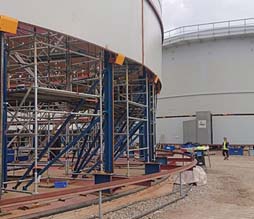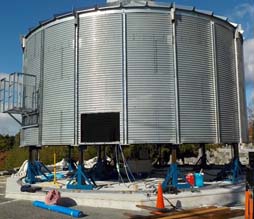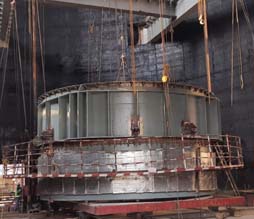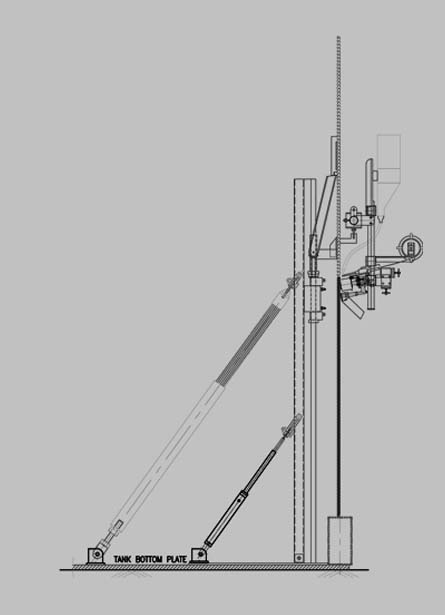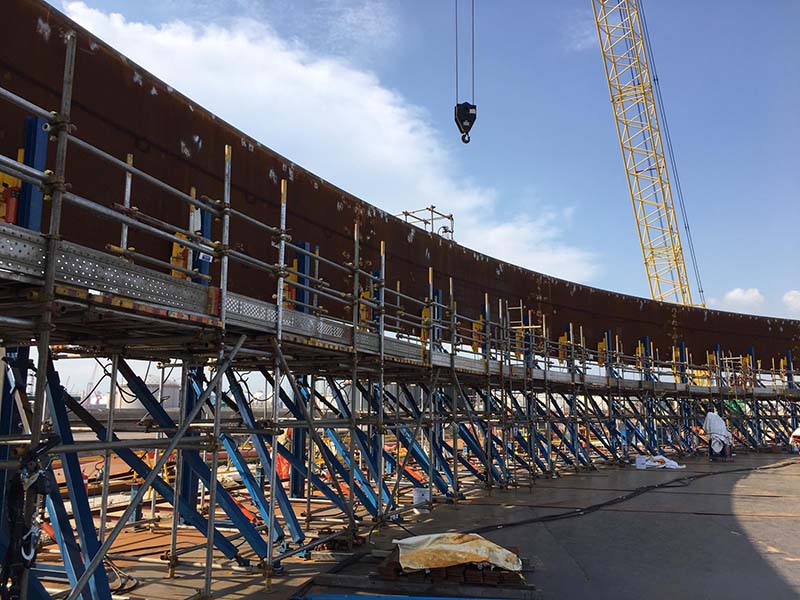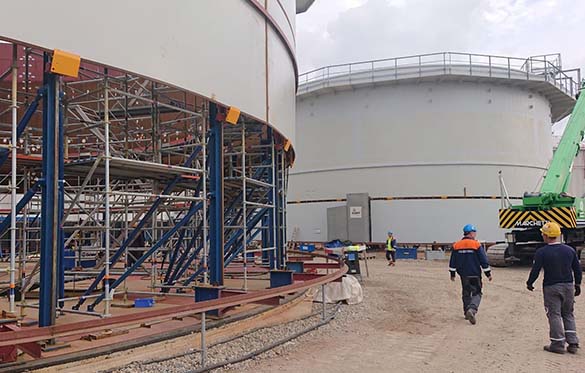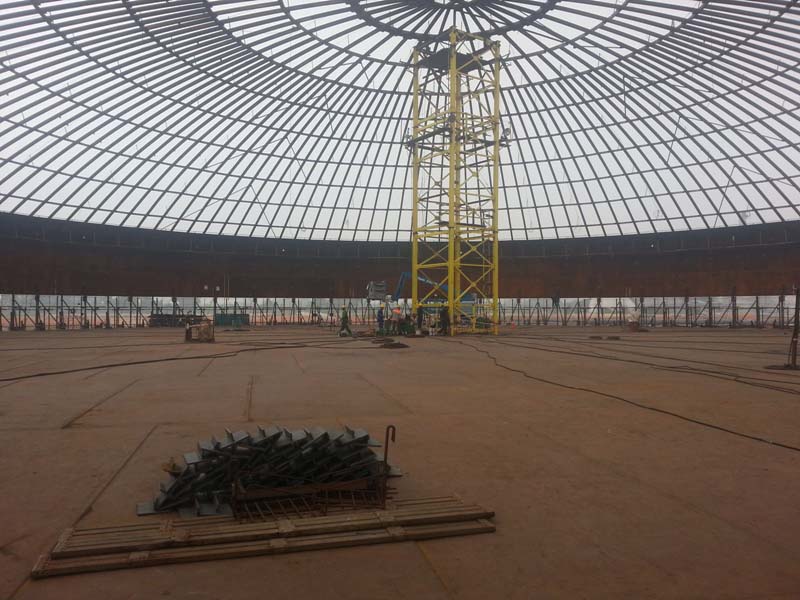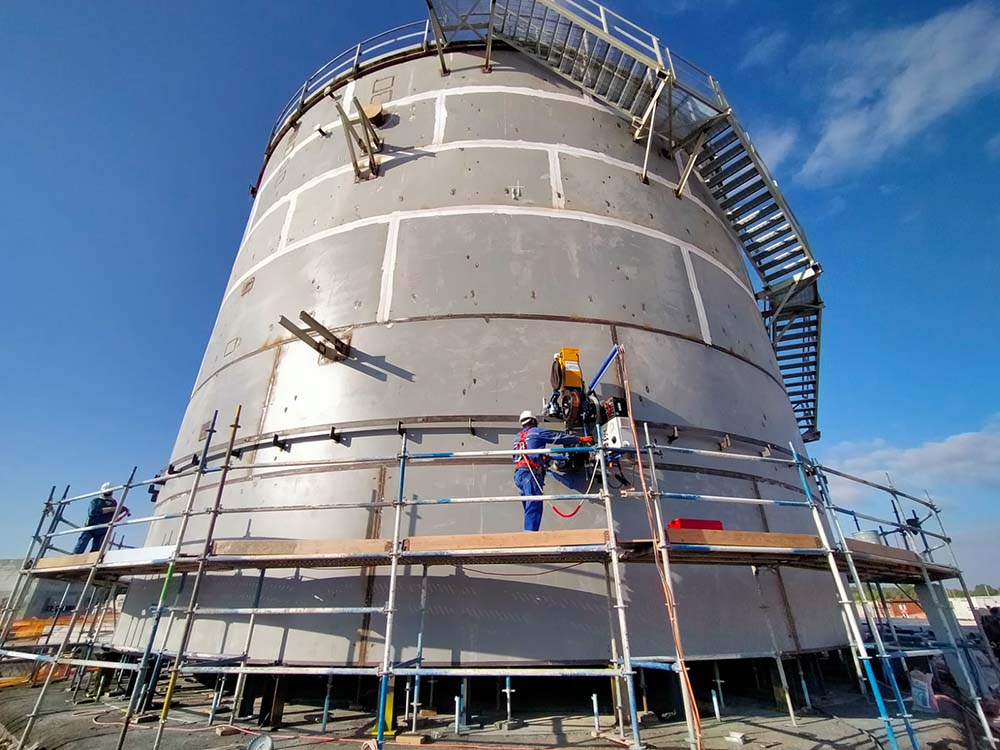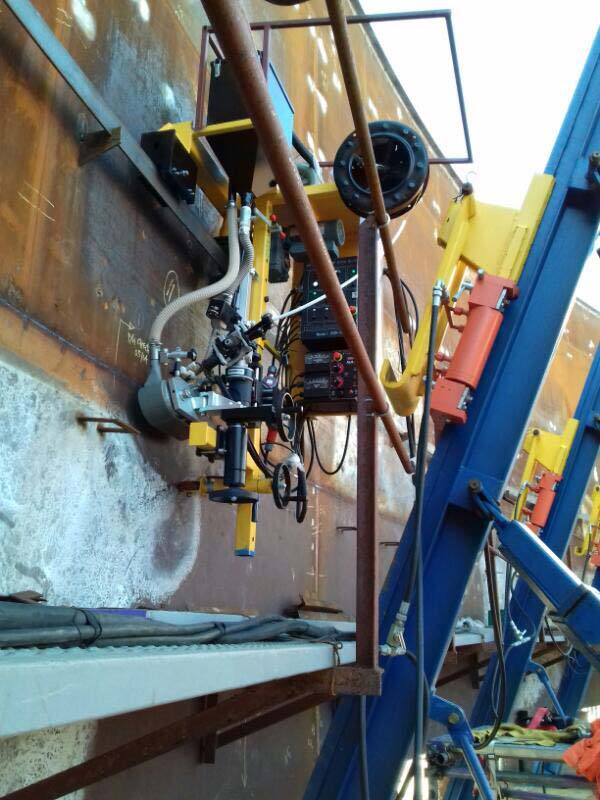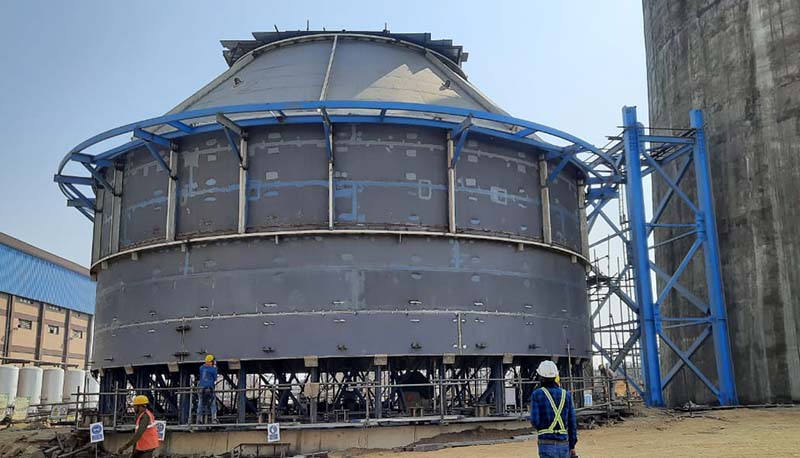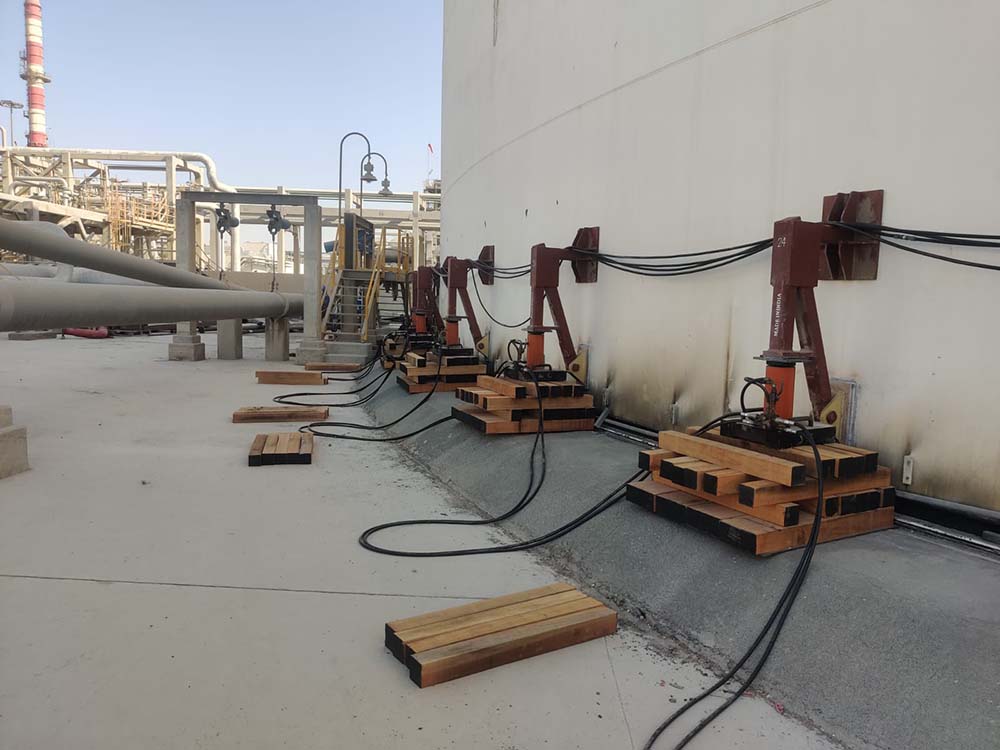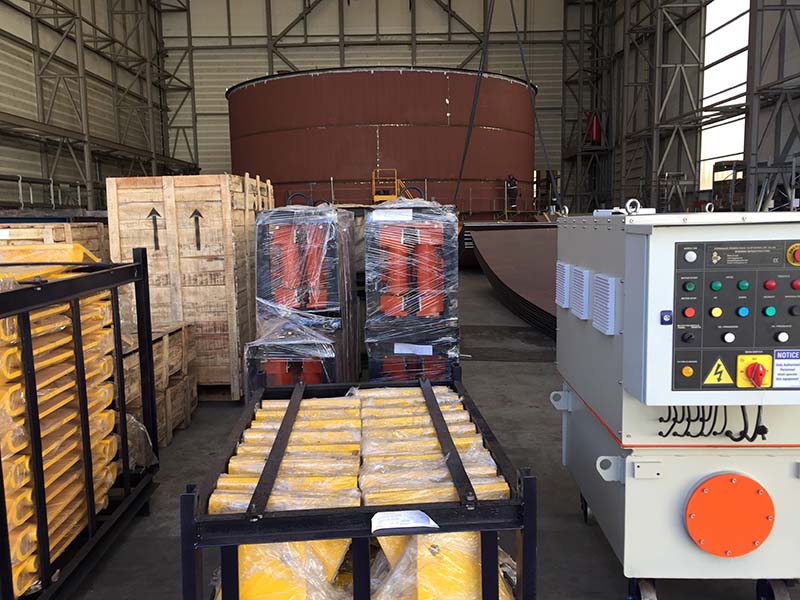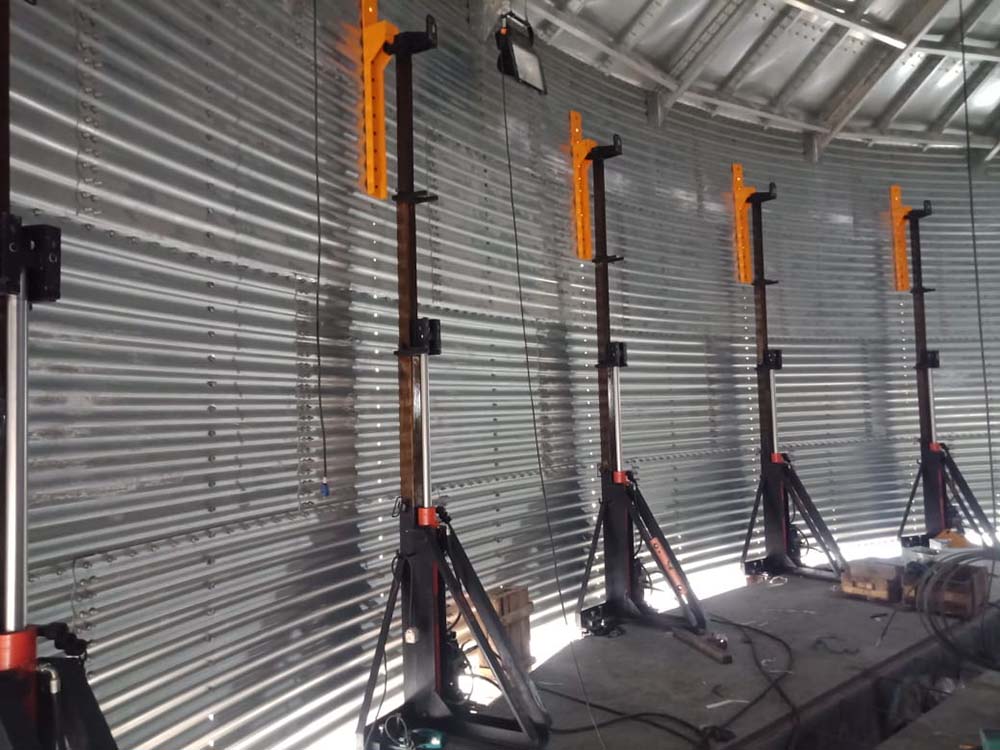
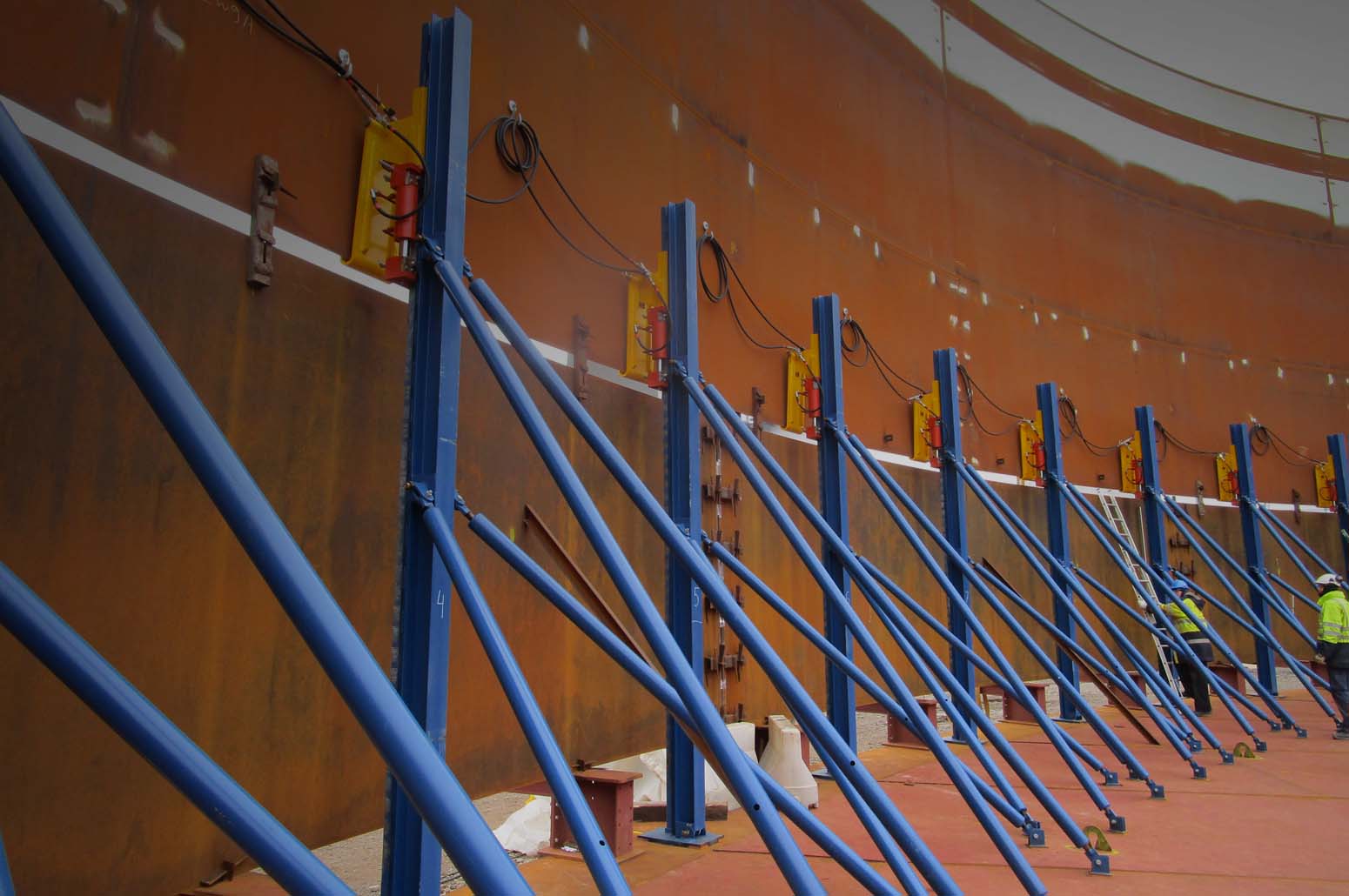
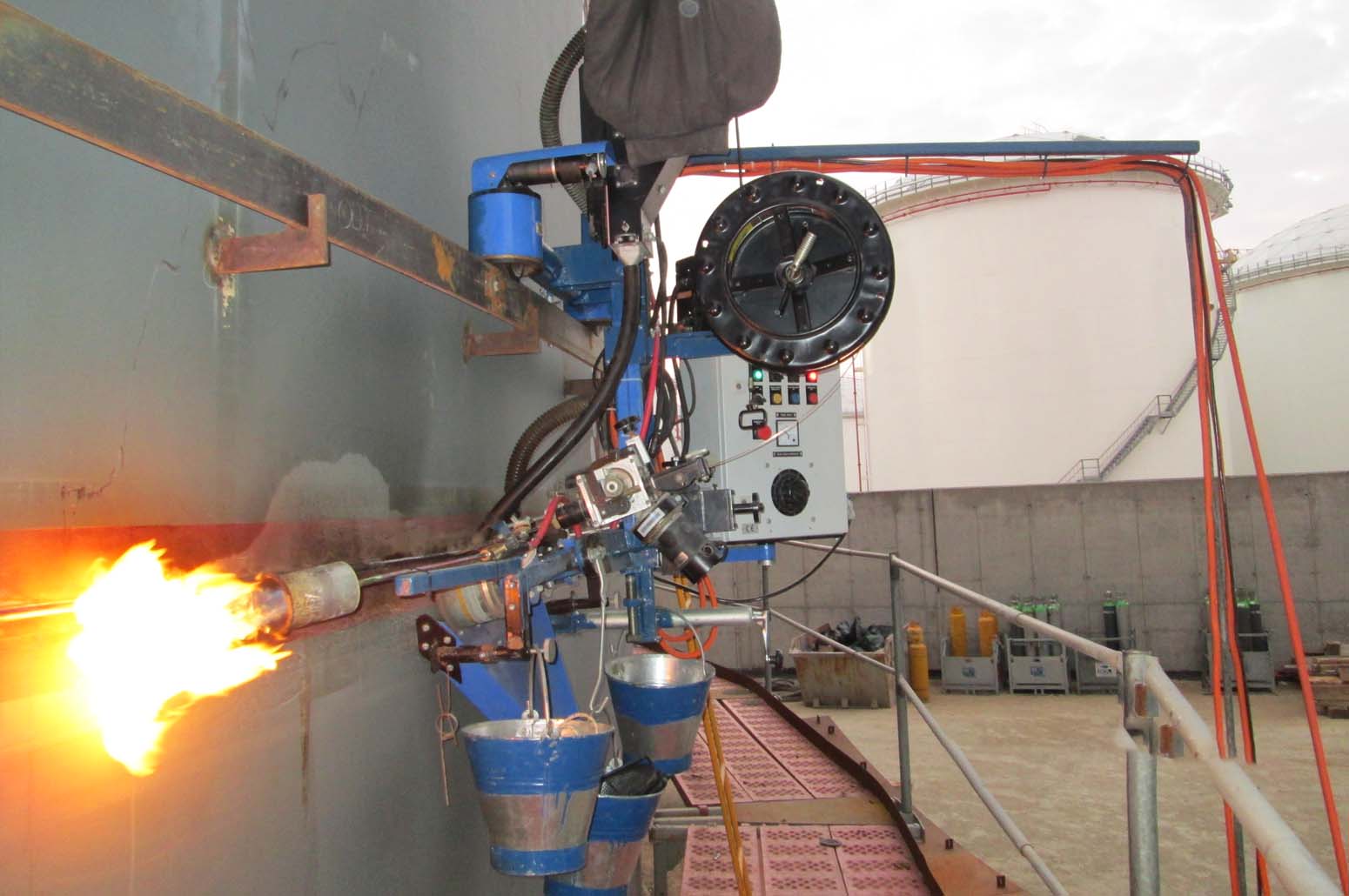
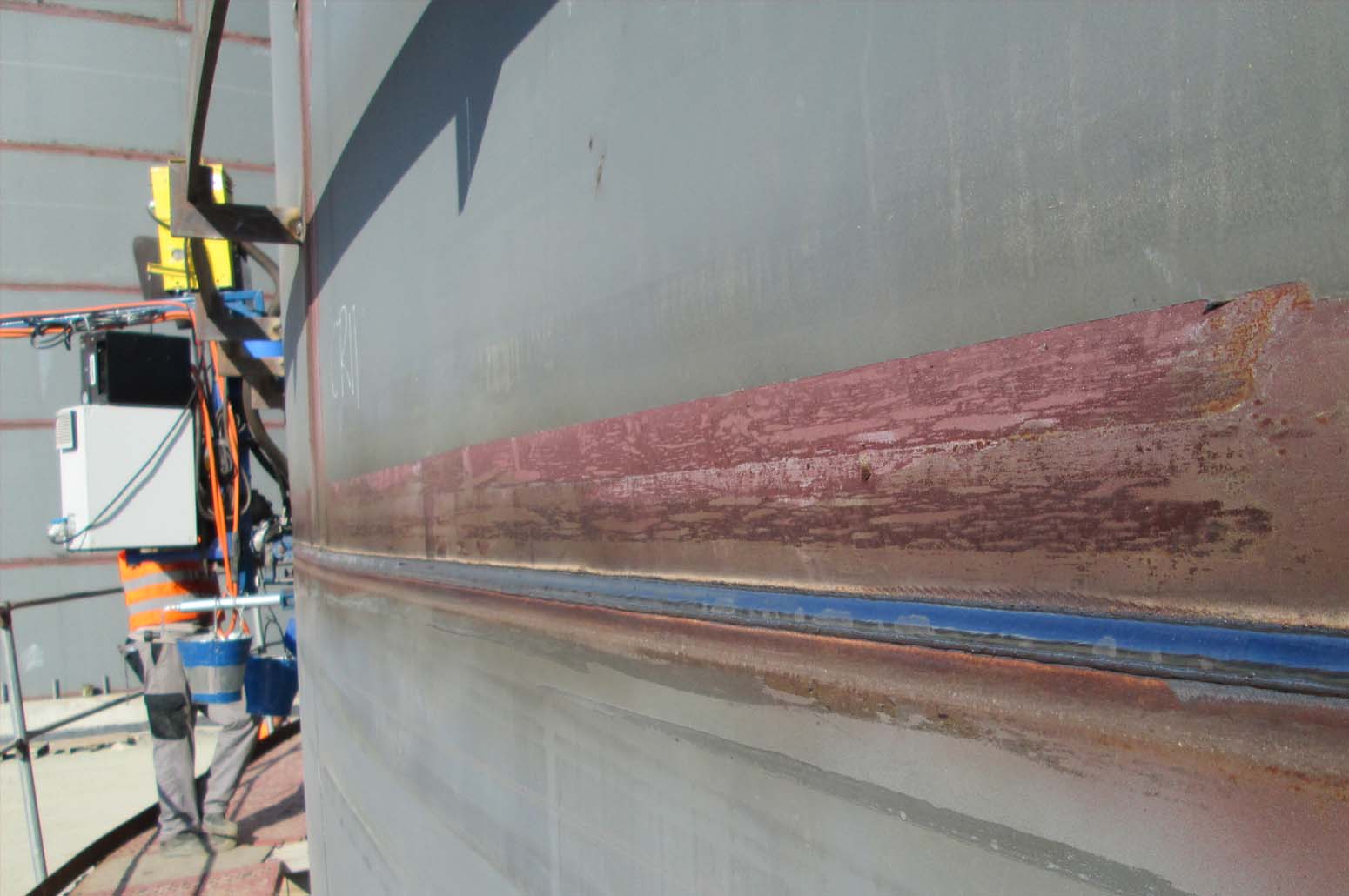
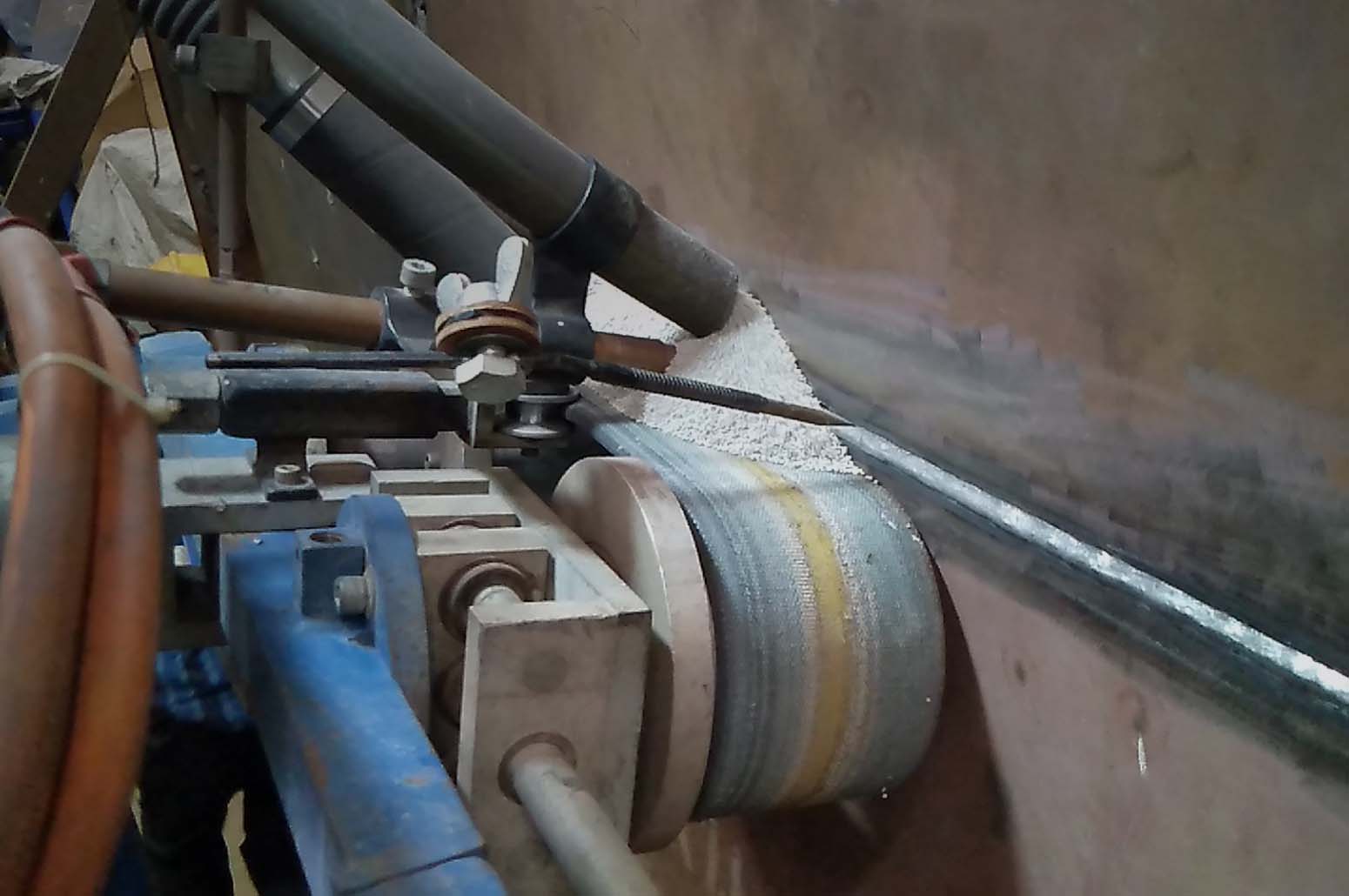
Basically the jack climbs up on the jack rod (which is a part of the lifting trestle) like a monkey climbs up a tree trunk, i.e, first it holds on to the trunk with its legs and lunges upwards, then it holds on to the trunk with its hands and lifts its legs up. At any time, either its hands or legs have a grip on the trunk which prevents it from falling down.
Similarly, the jack has two pairs of grip jaws, a lower pair of jaws and an upper pair of jaws. During lifting, both the pairs are in “locked” position. In this position the jack can move only upwards. During lifting, the lower pair of jaws grips the trestle rod while the jack lifts up. After making the full stroke, the upper pair of jaws grips the trestle rod while the base of the jack travels upwards. During lowering, any one of the pairs is engaged or locked.
Description of principle of the erection system
Refer drawings CC-1 and CC-2 below
The following short description gives the working procedure in outline. It can in certain details be modified when required.
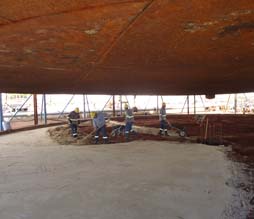
The tank botton-plates are placed on the prepared foundation and welded together.
Spacers cum guide beams of maximum 400 mm height are tack welded to the
tank bottom along the periphery. The plates of the first shell ring (in fact the top
ring of the tank) are positioned and welded together.
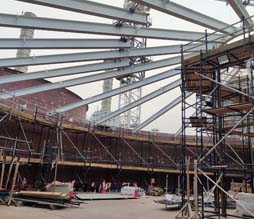
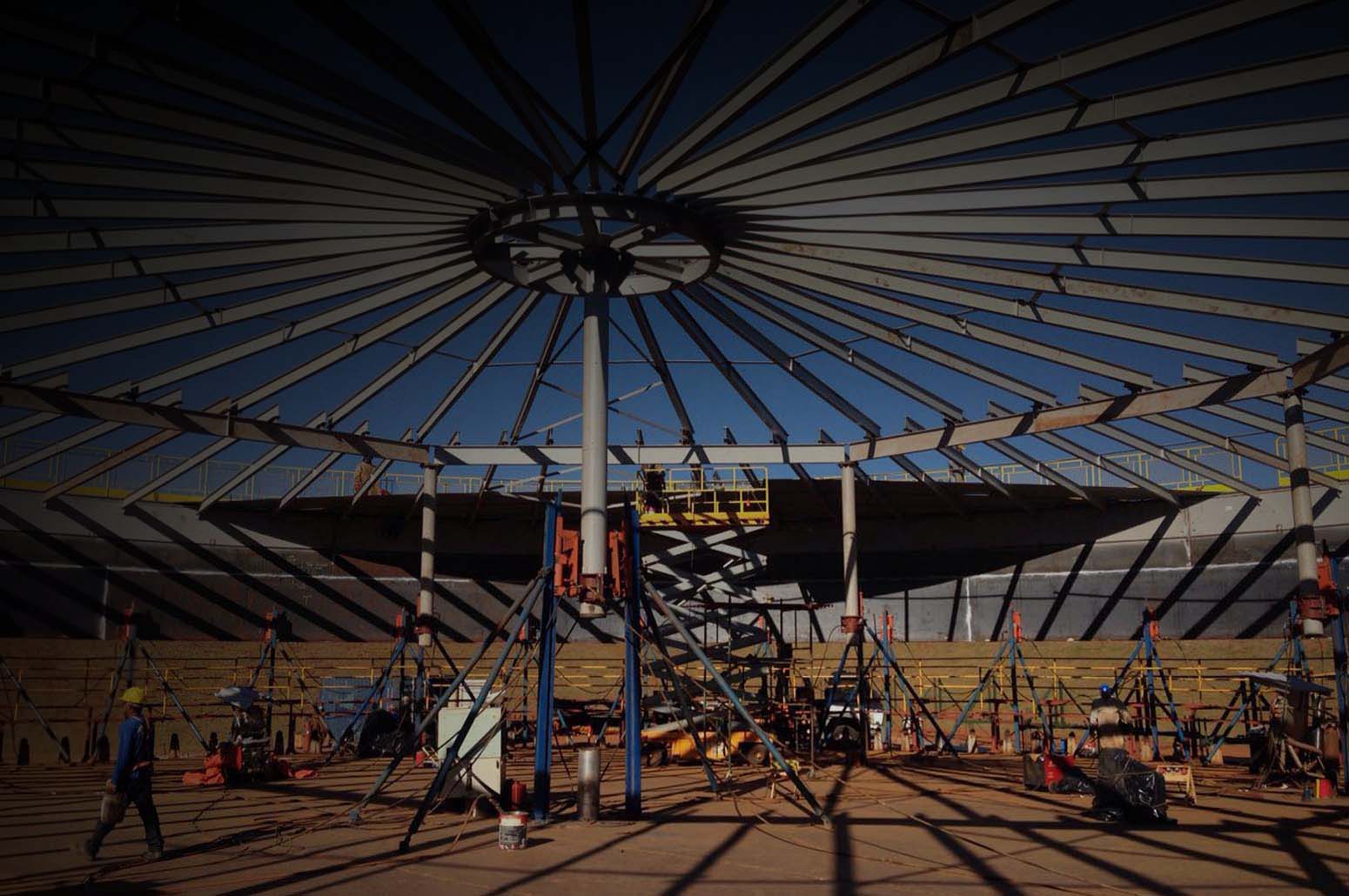
The beams or lattice work of the roof are assembled and finally joined to the upper rim of the shell ring. Possible the inner sheets of the roof are placed and welded together.
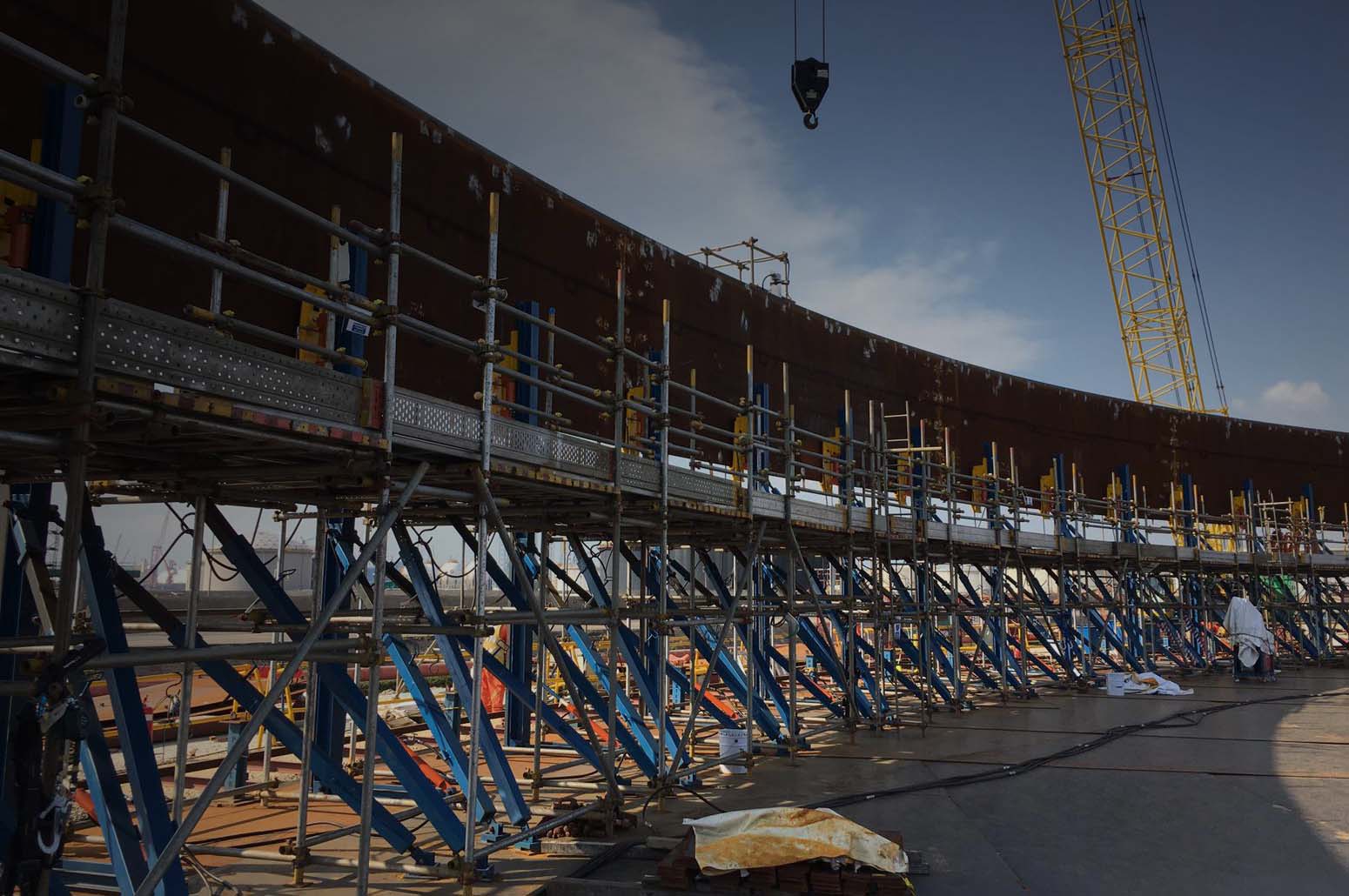
The lifting equipment is assembled according to Chapters 10 and 13. The plates of the second shell ring (next to top ring) are positioned outside the first one.
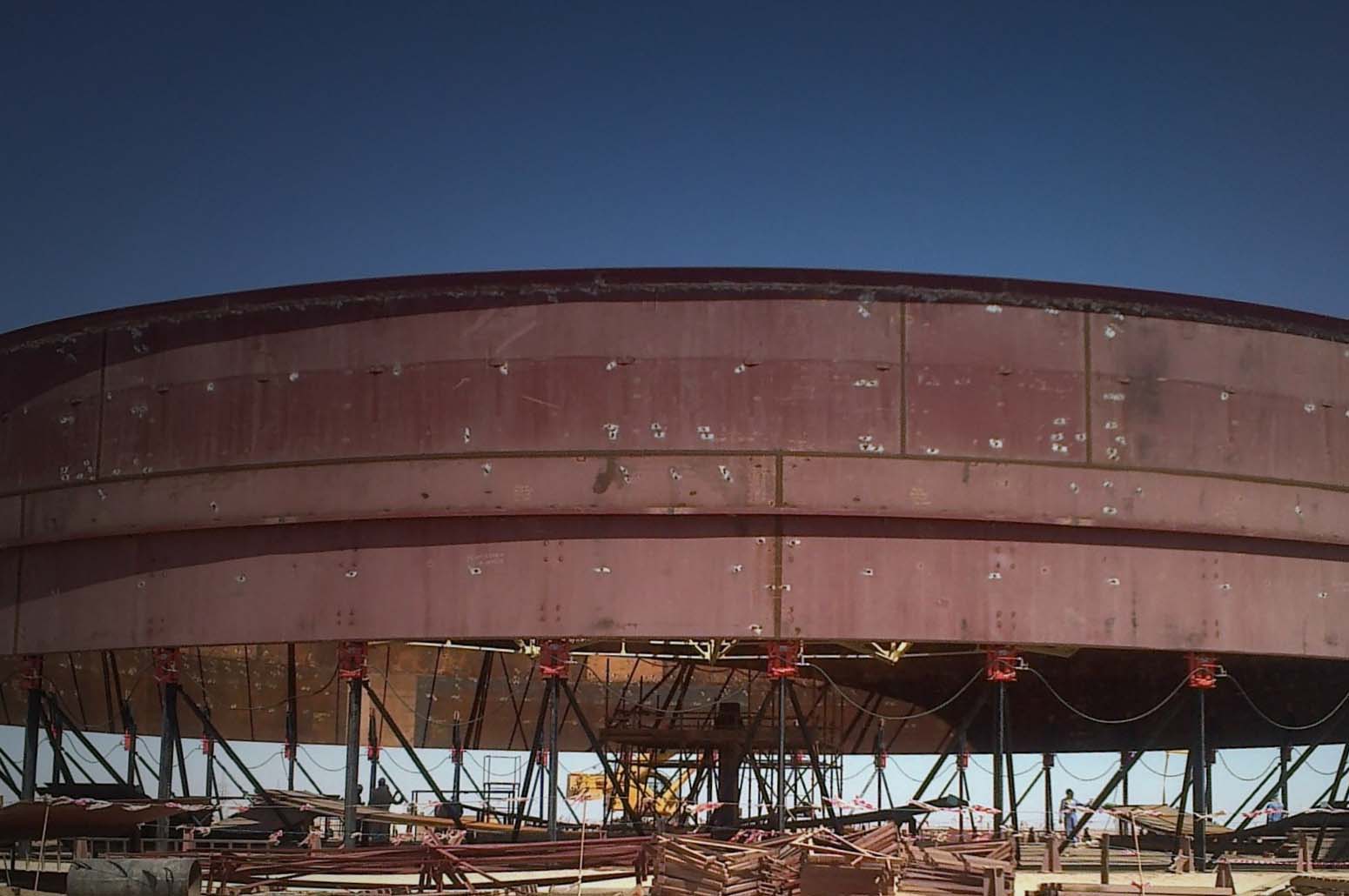
The completed part of the tank (the roof and top shell ring) is lifted hydraulically to a height, at which the plates of the second shell ring can be moved into place and the roof sheeting can be completed, except for about 2 or 3 roof plates which shall not be fixed until completion of the tank for air to pass through.
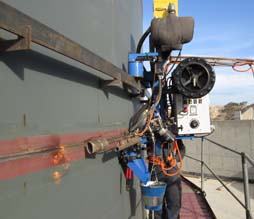
The plates of the second shell ring are located exactly and welded together to the lower edge of the first shell ring.
The plates of the third shell ring are placed outside the second shell ring.
The completed part of the tank (the roof and the two uppermost shell rings) is lifted.
The above cycle of operations is repeated until the last (bottom) shell ring is finished.
The entire tank is lowered down to the bottom plates and welded to this. The lifting equipment is dismantled.
Determining the number of jacks to be used for any tank :
The number of trestle required for a tank is settled by:
The maximum weight of the tank. The vertical load is max 8, 12 or 25 ton per trestle, depending upon the type of jacking equipment selected
The maximum wind load on the trestles.
The maximum distance between the lifting points in the shell with regard to the stability of shell.
The normal maximum distance between the trestles is 3 mtrs.